How to Start a Vending Machine Business: Costs, Profits and 9 Steps
Vending machines look like the perfect passive income: put a machine in a busy spot and collect the cash. The reality is more like a small delivery route. You buy stock, restock machines, collect money and keep good relationships with location owners. Done well, it can be a flexible, scalable side business. Done badly, you’re left with expensive machines in quiet corners.
This guide explains how to start a vending machine business step by step: costs, how to find good locations, what to stock, the rules you need to follow, and realistic earnings.
In this guide
- How the vending machine business works
- How much does it cost to start a vending machine business?
- How much can a vending machine make?
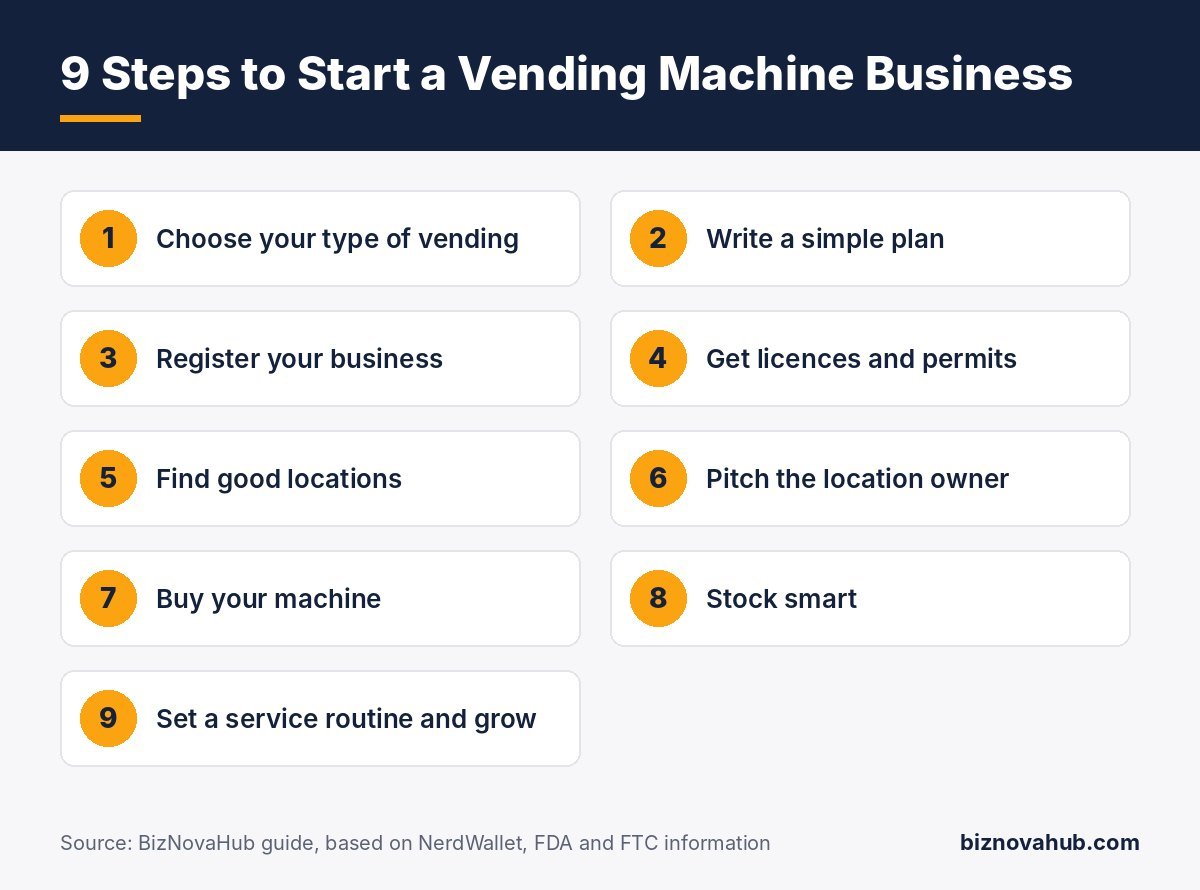
- How to start a vending machine business in 9 steps
- Pros and cons of a vending machine business
- Beware of vending “business opportunity” scams
- Example: profit from one snack machine
- A simple pitch for location owners
- Weekly service checklist
- 6 mistakes new vending operators make
- Frequently asked questions
How the vending machine business works
- You buy (or lease) a machine and place it at a location such as an office, gym, apartment building or warehouse.
- The location owner usually gets a share of sales as commission.
- You stock the machine, collect cash and card takings, and fix problems.
- Your profit is sales minus product costs, commission, card fees, fuel and machine costs.
The US vending machine operator industry is worth about $8.6 billion, according to IBISWorld data cited by NerdWallet.
How much does it cost to start a vending machine business?
| Cost | Typical range |
|---|---|
| New vending machine | $3,000–$10,000, depending on size and features |
| Used or refurbished machine | About $1,200–$3,000 |
| Bulk (gumball/candy) machine | Can be under $50 refurbished |
| Initial stock | A few hundred dollars per machine |
| Card reader | Upfront cost plus monthly and per-transaction fees |
| Location commission | Typically 5%–25% of sales |
Machine prices and commission range: NerdWallet. NerdWallet suggests a basic operation can start from around $2,000.
How much can a vending machine make?
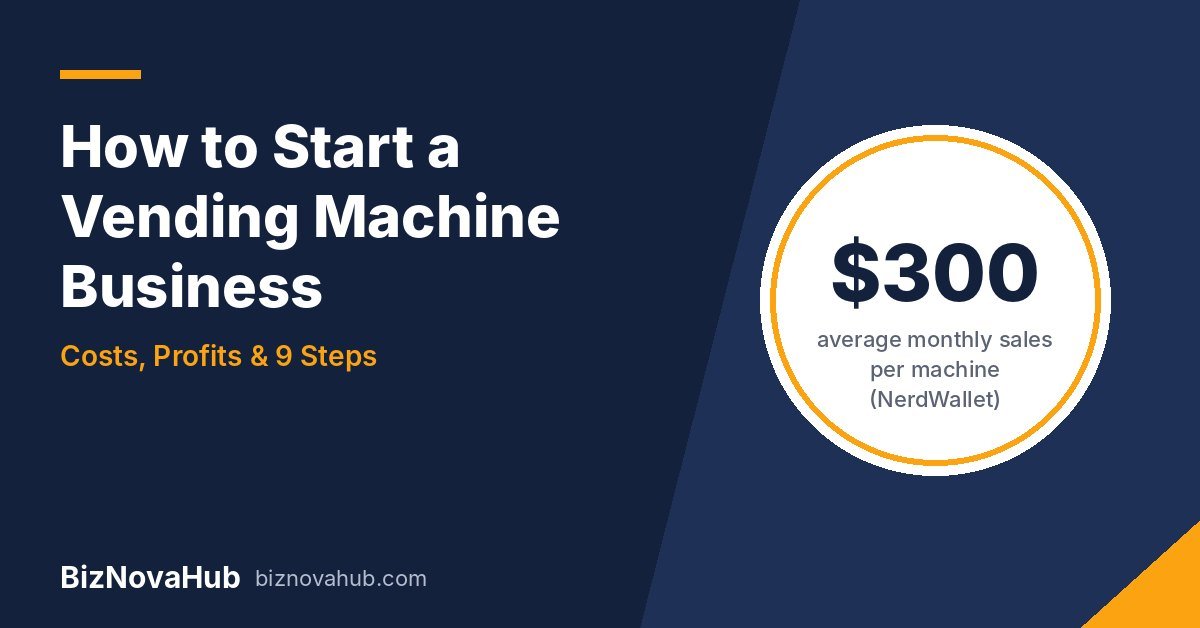
NerdWallet estimates an average machine earns around $75 a week (about $300 a month), while strong locations can make more than double that. Small bulk machines may make around $30 a month. That’s revenue, not profit, so subtract product costs and commission to see what you really earn.
The lesson: location matters more than the machine. One great spot can outperform five average ones.
How to start a vending machine business in 9 steps
1. Choose your type of vending
| Type | Pros | Cons |
|---|---|---|
| Snack and drink machines | Proven demand; easy to stock | Higher machine cost; competition for good sites |
| Combo machines (snacks + drinks) | One machine covers both; good for smaller sites | Limited choice per category |
| Healthy vending | Popular in gyms, offices and schools | Shorter shelf life, higher product cost |
| Bulk vending (gumballs, toys) | Very cheap to start; little maintenance | Low revenue per machine |
| Specialty (PPE, phone chargers, coffee, fresh food) | Less competition; higher prices | Higher cost; niche demand |
2. Write a simple plan
Decide how many machines you’ll start with (one or two is sensible), your budget, the area you’ll cover and how much time you can give each week to restocking.
3. Register your business
Most operators start as a sole proprietor or form an LLC to separate personal assets from business debts. Read our guide to LLC vs sole proprietorship. In the UK, you can trade as a sole trader or set up a limited company (see sole trader vs limited company).
4. Get the licences and permits you need
- Sales tax permit (US): most states tax vending sales. Register with your state’s revenue department.
- Local business licence: many cities and counties require one, and some charge a fee per machine.
- Food rules: machines selling perishable or fresh food may need a health permit.
- FDA calorie labelling: under the FDA vending machine labelling rule, operators who own or operate 20 or more vending machines must show calorie information for food sold. Smaller operators can register voluntarily.
- UK: food businesses in England, Wales and Northern Ireland must register with their local council at least 28 days before trading. Ask your council how this applies to your vending machines.
5. Find good locations (the most important step)
Look for places where people wait, work long hours or have few other food options:
- Offices, warehouses and factories with 50+ workers
- Gyms, car washes and laundromats
- Apartment buildings, student housing and hotels
- Auto repair shops, hospitals waiting areas and community centres
Avoid sites that already have a well-stocked machine, have a canteen next door or close at weekends. Before you sign, ask how many people visit or work there each day.
6. Pitch the location owner
Keep it simple: you supply, stock and maintain the machine for free; they get a commission or a perk for staff; you’ll stock what their people want. Put the deal in writing: commission rate, how you’ll pay it, how long the agreement lasts and how either side can end it.
7. Buy your machine
Buying used saves money, but check the cooling, coin and note mechanisms, and make sure you can get spare parts. Make sure the machine accepts card and contactless payments. Many customers no longer carry cash.
8. Stock smart
- Buy from wholesale clubs or cash-and-carry suppliers to keep margins healthy.
- Track what sells and replace slow items every few weeks.
- Ask the location’s staff what they’d like to see.
- Rotate stock by expiry date.
9. Set a service routine and grow
Restock and clean every machine on a set schedule. Telemetry card readers can show sales remotely so you only visit when needed. Once your first machines are profitable, add new locations near your existing route to keep travel time low.
Pros and cons of a vending machine business
| Pros | Cons |
|---|---|
| Flexible hours; works as a side business | Not truly passive: restocking and repairs take time |
| Scales one machine at a time | Good locations are competitive |
| No shop or staff needed at the start | Vandalism, theft and breakdowns |
| Low-cost entry with used or bulk machines | Thin margins at weak locations |
Beware of vending “business opportunity” scams
Be careful with companies that sell machines with “guaranteed locations” and big income promises. In the US, the FTC’s Business Opportunity Rule requires sellers to give you a one-page disclosure document, including whether they make earnings claims, at least seven days before you sign or pay anything (FTC). Speak to existing buyers and never pay for locations you haven’t seen.
Example: profit from one snack machine
Using NerdWallet’s average of about $300 a month in sales, here’s how the money might break down. Product costs and fees vary, so treat this as an illustration, not a forecast.
| Item | Monthly example |
|---|---|
| Sales | $300 |
| Product cost (assume 50% of sales) | −$150 |
| Location commission (assume 10%) | −$30 |
| Card fees and reader subscription | −$20 |
| Fuel and time for restocking | −$20 |
| Profit before tax and machine cost | about $80 |
At about $80 a month, a $2,500 used machine takes over two years to pay for itself. A strong location doing double the sales changes that picture completely, which is why choosing locations matters more than anything else.
A simple pitch for location owners
Use this as a starting point when you approach a business owner or office manager:
“Hi, I run a local vending service. I’d like to place a snack and drink machine here at no cost to you. I’ll stock it with what your team and customers want, keep it clean, fix any problems quickly and accept card and contactless payments. I can also share a percentage of sales with you. Could we try it for 90 days?”
Bring photos of the machine, a one-page summary of what you offer and your insurance details. A free trial period lowers the risk for the owner.
Weekly service checklist
- Restock bestsellers first and rotate older stock to the front
- Remove anything past its date
- Clean the glass, keypad, card reader and delivery bin
- Check coin and note acceptors and card reader connectivity
- Check fridge temperature on drink and fresh food machines
- Note slow sellers and replace them next visit
- Collect cash and record sales per machine
6 mistakes new vending operators make
- Buying machines before securing locations.
- Trusting “turnkey” sellers that promise locations and income.
- Cash-only machines, which lose sales to card and phone users.
- Stocking what you like instead of what sells at that location.
- Agreeing to high commissions at locations with low foot traffic.
- Ignoring local permits and sales tax, which can lead to fines.
Frequently asked questions
Is a vending machine business profitable?
It can be, but profit depends almost entirely on location. NerdWallet’s estimate of about $300 a month in revenue for an average machine means you need good sites, low product costs and fair commissions to earn a meaningful income.
How much does one vending machine cost?
New machines typically cost $3,000–$10,000, and used ones around $1,200–$3,000. Small bulk machines can cost far less.
Do I need a licence to own a vending machine?
Usually you need a general business licence and, in the US, a sales tax permit. Some areas charge a per-machine fee, and food machines may need health permits. Requirements vary by state, county and city.
Where is the best place to put a vending machine?
Places with steady foot traffic and few nearby food options, such as busy workplaces, gyms, laundromats, apartment buildings and car service centres.
This guide is general information, not legal or financial advice. Check local permit rules before placing machines.